Ringworm in Children
Ringworm (tinea) affects people of all ages, but children and adolescents contract the infection the most. This is because the infection is highly contagious and children are usually more interested in having fun than avoiding disease. They can get ringworm in a number of places including the scalp, groin, feet, and hands and school is the most likely place where they will become infected.
The symptoms of ringworm in children are the same as those in adults, which are:
- A red rash that may be slightly raised; often it is in the shape of a ring but not always.
- Itching
- Ringworm in the hair will cause bald spots that are filled with small black dots. Your child may also come down with a fever.
- Tinea on the foot (athlete’s foot) or hands causes dry, thick, scaly skin. The toenails or fingernails may become discolored, crumbly, or thickened. The skin between the fingers and toes will be damp and broken.
- Jock itch (tinea in the groin area) causes itching and a rash to appear in the folds of the crotch area. The rash may spread to the inner thighs, buttocks, or anus.
Diagnosing Ringworm in Children
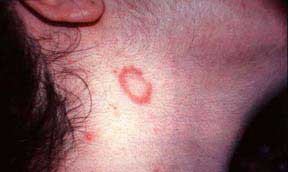 If you notice your child frequently scratching an area on his or her body or is starting to lose hair, it is a good idea to examine the affected area and under ultraviolet light (UV) if possible. A ringworm infection will glow under UV light. Ringworm is frequently misdiagnosed as eczema or similar skin disorders, so take your child to the doctor if you notice the telltale red rash. Usually the pediatrician can diagnose the condition simply by looking at affected area, but he or she may take a sample of the skin under a microscope to make sure.
After confirming the diagnosis, the pediatrician will usually recommend an over-the-counter medication you can use to clear up the infection. It is important to use the product for the entire course of treatment as the rash will frequently disappear but the fungus that caused it will still be active. For effective and safe ringworm medication you can use to treat a child with tinea, read our reviews of the best products available on the homepage.
Preventing Ringworm
Good hygiene and a strict cleaning regimen will significantly reduce your child’s risk of being infected with ringworm. Teach your child to always wash his or her hands on a regular basis and to avoid sharing personal items like clothing. Regularly cleaning your home using an antifungal solution will kill the infection on surfaces. It is particularly important to clean all areas, bedding, clothing, and objects that an infected child has touched to avoid spreading the infection to other members of the family.
Children who are active in sports are at a particularly high risk of catching ringworm, especially jock itch and athlete’s foot. Teach kids to wear protective footing while using public showers and to thoroughly dry themselves off after bathing or swimming. Since cats, dogs, and other animals can carry ringworm and transmit it to humans, teach your child not to touch strange animals.